
Size and fit guide
EU to US Running Shoe Size Guide for Larger Men's Fit
When running shoe sizes move into US men's 10.5-17, small fit differences matter. This guide explains how OPTCLA EU 44-52 maps to approximate US men's sizes and how to think about heel security, midfoot support, and forefoot room before checkout.
Size conversions are approximate. Foot shape, sock thickness, running style, and brand fit history can change what feels best.
OPTCLA EU 44-52 approximate US men's size chart
| OPTCLA size | Approx. US men's size | Fit note |
|---|---|---|
| EU 44 | US Men's 10.5 | Best if your usual running shoe is around US 10-10.5. |
| EU 45 | US Men's 11.5 | Good starting point for US 11-11.5 runners. |
| EU 46 | US Men's 12 | Standard US 12 fit for daily road running and walking. |
| EU 47 | US Men's 13 | Useful when you need more length without losing heel control. |
| EU 48 | US Men's 14 | Built for larger feet that need front-foot comfort. |
| EU 49 | US Men's 15 | Allows more space for longer wear and toe movement. |
| EU 50 | US Men's 16 | Extended men's sizing for a larger daily running fit. |
| EU 51 | US Men's 16.5 | Consider if EU 50 feels short or tight near the toes. |
| EU 52 | US Men's 17 | Largest current OPTCLA size for extended comfort fit. |
Why larger running shoe sizes need careful fit checks
In larger men's sizes, a shoe can feel long enough but still too narrow in the forefoot. It can also feel roomy at the front but loose through the heel. The right fit should separate these two issues: secure hold through the heel and midfoot, with enough room at the front for natural toe movement.
For daily road running, walking, errands, and long wear, front-foot comfort is not optional. If the front of the shoe feels tight during a short indoor try-on, it may feel more restrictive after hours of walking or running.
When to choose the larger size
Choose the larger size if you are between sizes, wear thicker socks, often feel toe pressure in running shoes, or prefer more front-foot room for long wear. A slightly roomier front can be useful for daily mileage because feet can feel fuller after repeated steps.
Do not size up only to solve heel rubbing. If the heel already slips, a larger size may increase movement. In that case, contact support before ordering or compare how your current running shoes fit through the heel and midfoot.
How to check fit at home
- Measure both feet later in the day and use the longer foot as your reference.
- Compare your usual running shoe size, not only dress shoe size.
- Wear the socks you expect to use for walking or running.
- Check that the heel stays secure during indoor walking.
- Confirm that toes can move naturally without side pressure.
How OPTCLA is built for larger daily comfort
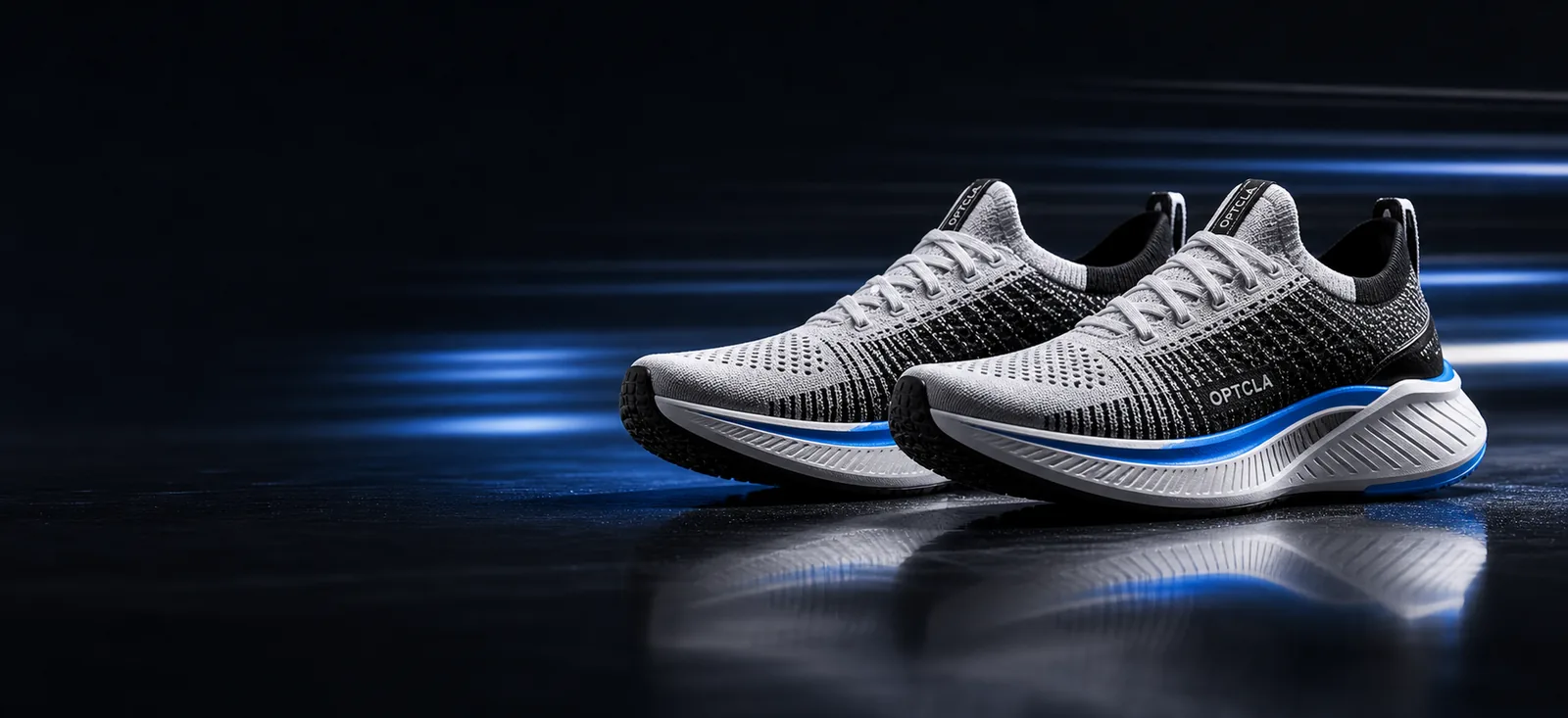
OPTCLA AeroMax Runner is offered in EU 44-52 and built around daily road comfort: responsive foam cushioning, breathable mesh, stable heel support, and a roomier forefoot shape. That combination matters for customers who want extended men's sizing without a narrow, restrictive front fit.
For a deeper fit discussion, read the roomy toe box running shoes guide. For a broader daily-use comparison, see walking shoes vs running shoes for daily wear.
Choose your OPTCLA size before checkout.
Compare EU 44-52, choose your color, and use secure Stripe or PayPal checkout. Eligible US and Canada orders include a 30-day return and exchange window.
Choose Size and Color View ReturnsFAQ
What US men's sizes does OPTCLA EU 44-52 cover?
OPTCLA EU 44-52 roughly covers US men's 10.5 through 17, depending on foot shape, sock thickness, and preferred running shoe fit.
Are EU to US running shoe conversions exact?
No. EU to US conversions are approximate because brands use different lasts and fit standards. Use the chart as a starting point and consider your usual running shoe fit.
Should I choose a larger size if my toes feel tight?
If your usual size creates toe pressure, or if you prefer more forefoot room for longer wear, choosing the larger size may be more comfortable.