
Fit and comfort guide
Roomy Toe Box Running Shoes for Forefoot Comfort
If a running shoe feels good under the heel but cramped across the toes, it usually will not stay comfortable for daily miles. Forefoot space helps the foot move naturally, especially during long walks, road runs, and full days on hard surfaces.
This guide is educational and focused on fit and comfort. Running shoes can support a more comfortable ride, but they are not medical devices and do not treat injuries.
Why the front of the shoe matters
Many shoppers judge running shoes by cushioning first. Cushioning matters, but the front of the shoe can decide whether a pair feels comfortable after the first mile. When the toe box is too narrow, the toes can feel squeezed, the foot may push against the upper, and longer wear can feel hotter and more restrictive.
A roomy toe box does not mean the shoe should feel oversized. It means the forefoot has enough shape and space for natural toe movement while the rest of the shoe still feels controlled.
Roomy is different from loose
A comfortable running shoe should have two different fit zones. The heel and midfoot should feel secure so the foot does not slide. The forefoot should feel more forgiving so toes can spread slightly as your weight moves forward.
If a shoe is roomy everywhere, it may feel unstable. If it is tight everywhere, it may create pressure. The best daily fit is secure where the foot needs control and relaxed where the toes need movement.
Forefoot comfort helps walking days too
Toe box space is not only for runners. Walking, standing, travel, and errands all involve repeated pressure through the front of the foot. A shoe that feels narrow during a quick try-on can feel much tighter after several hours.
For people who want one pair for walking and easy road running, forefoot comfort is especially important. It helps the shoe feel more natural across different speeds and routines.
How much space should you look for?
There should be enough room at the front for the toes to move without pressing hard against the upper. You should not feel sharp side pressure across the widest part of the foot. At the same time, your heel should not lift and your foot should not slide forward when you walk.
If you are between sizes, wear thicker socks, or often feel toe pressure in running shoes, compare your usual size with the next size up. Our EU 44-52 size guide can help you choose the best starting point.
What to check before checkout
| Fit area | What you want | Warning sign |
|---|---|---|
| Heel | Stable hold without rubbing | Heel lifts with each step |
| Midfoot | Secure wrap without squeeze | Pressure over the top of the foot |
| Forefoot | Natural toe movement | Toes feel cramped or pushed inward |
| Cushioning | Soft landing with stable transition | Platform feels mushy or uneven |
How OPTCLA AeroMax Runner approaches fit
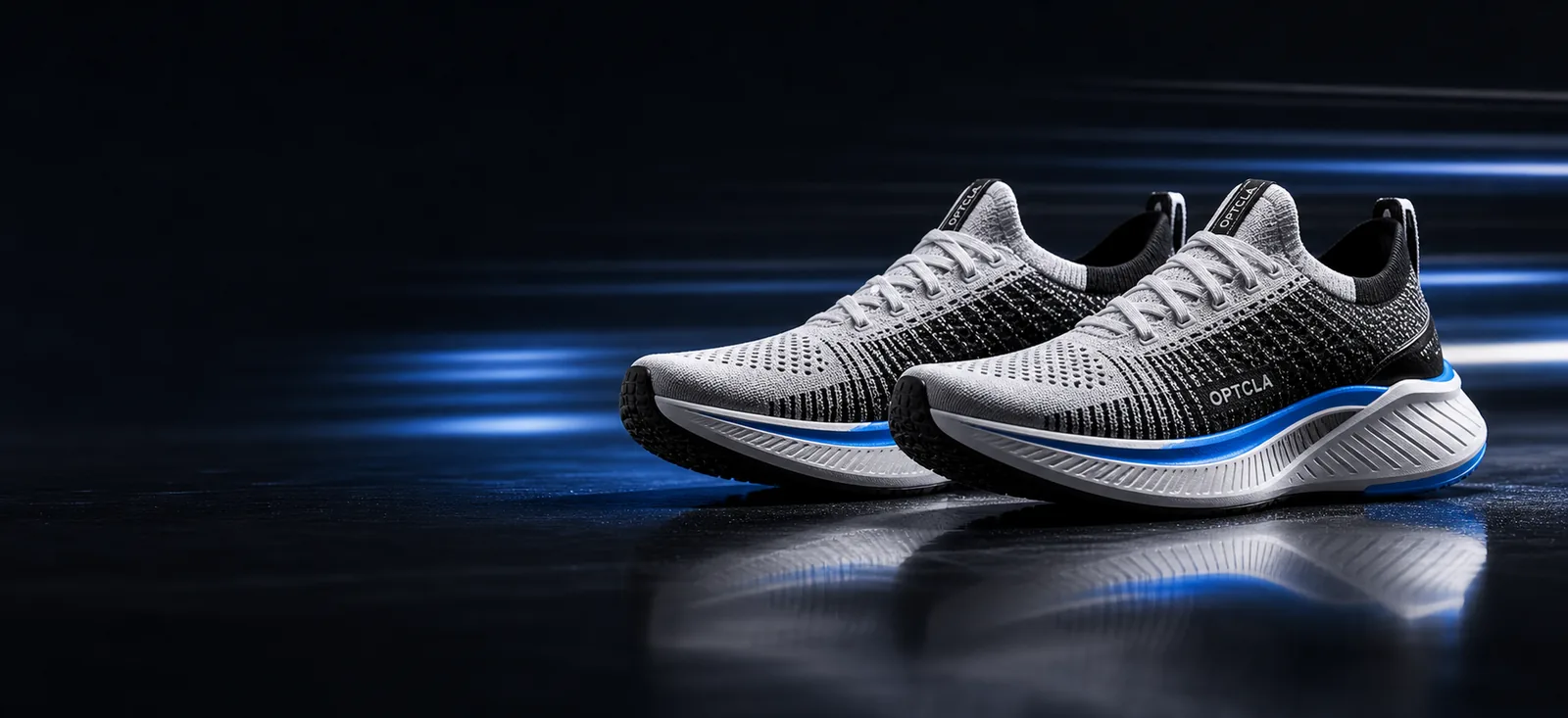
OPTCLA AeroMax Runner is designed for daily road comfort: responsive cushioning underfoot, breathable mesh through the upper, a stable heel structure, and a roomier front fit for longer wear. The goal is not a sloppy oversized shoe. The goal is a secure trainer that gives the forefoot enough space to stay comfortable through repeated steps.
If your main concern is hard pavement, read our guide to running shoes for reducing impact on pavement. If heat and daily wear are bigger concerns, the breathable walking and running shoe guide explains what to look for.
Quick forefoot comfort checklist
- Your toes can move naturally inside the front of the shoe.
- The widest part of your foot does not feel pinched.
- Your heel stays secure while walking indoors.
- The shoe feels stable, not loose, when turning.
- You can choose size and color confidently before checkout.
Choose a more comfortable daily running fit.
OPTCLA AeroMax Runner combines forefoot room, breathable comfort, responsive cushioning, secure Stripe and PayPal checkout, and a 30-day return and exchange window.
Choose Size and Color View Size GuideFAQ
Are roomy toe box running shoes better for daily comfort?
They can be more comfortable when they give the toes space to move while still holding the heel and midfoot securely.
How much toe room should a running shoe have?
Many runners prefer a small amount of extra length and width at the front for longer wear. The shoe should not feel loose through the heel or midfoot.
Does a roomy toe box mean I should size up?
Not always. A good running shoe can offer forefoot room in the shoe shape itself. If you are between sizes or feel toe pressure in your usual size, the larger size may be more comfortable.