
Running comfort guide
Running Shoes for Knee Comfort: What Features Matter?
If your knees feel beat up after running on pavement, the right shoe can make daily miles feel more controlled and comfortable. It will not replace training balance or medical care, but cushioning, stability, fit, and breathability all affect how your body experiences the run.
This guide is educational and not medical advice. If knee pain is sharp, persistent, one-sided, or changes your gait, pause running and speak with a qualified healthcare professional.
Why knees can feel sore after road running
Road running is repetitive. Each stride sends force through the shoe, foot, ankle, knee, hip, and lower back. When mileage increases too quickly, when surfaces are hard, or when a shoe feels unstable, that repetition can become noticeable. Many runners describe it as a dull ache after pavement runs, discomfort after longer walks, or soreness the next morning.
A shoe cannot fix every cause of knee discomfort. Strength, mobility, weekly mileage, running form, recovery, and previous injury history all matter. But shoes are still part of the system. The right daily trainer can make impact feel softer, help the foot land more consistently, and reduce distractions caused by heat, slipping, or cramped toes.
1. Cushioning should soften impact without feeling unstable
Cushioning is usually the first feature people think about when they search for running shoes for knee comfort. A responsive foam midsole can soften the feel of repeated landings, especially on concrete and asphalt. The goal is not simply the tallest or softest shoe. The better target is a cushioned platform that feels protective while still letting your stride stay controlled.
If a shoe is too firm, every landing can feel harsh. If it is too soft or narrow underfoot, the foot may feel like it is sinking or wobbling. For daily running, many people do best with a middle ground: enough foam to take the edge off pavement, enough structure to keep transitions smooth, and enough ground contact to avoid feeling disconnected.
2. Stability matters even if you do not need a stability shoe
Some runners need formal stability shoes, but many simply need a neutral shoe that does not feel sloppy. For knee comfort, look at how the heel, midfoot, and forefoot behave together. A secure heel counter helps reduce slipping. A stable midsole shape helps the shoe feel predictable. A smooth forefoot transition helps the stride roll forward without forcing the leg to compensate.
When a shoe twists easily, collapses inward, or makes your foot work too hard to stay centered, fatigue can build faster. That does not automatically cause knee pain, but it can make the run feel less efficient and less repeatable. A good daily shoe should feel boring in the best way: stable, smooth, and easy to forget.
3. Fit affects comfort more than most runners expect
Fit is not only about length. A running shoe should hold the heel, support the midfoot, and still leave natural space at the front. If the toes are crowded, the foot may tense up. If the heel slips, the runner may tighten the laces too much or change stride mechanics. If the upper presses across the top of the foot, the shoe can feel uncomfortable long before the midsole wears out.
For online buying, use your usual running shoe size as a starting point, then check the brand's size guide. OPTCLA currently offers EU 44-52 with approximate US men's conversions in the OPTCLA size guide. If you are between sizes, prefer thicker socks, or want more toe room for longer wear, the larger size may feel better.
4. Breathable uppers help daily shoes feel better for longer
Breathability does not get as much attention as foam, but it matters for comfort. Heat and moisture can make a shoe feel tighter, heavier, and less pleasant during daily wear. An engineered mesh upper helps air move through the shoe and can make warm-weather runs or long walking days feel easier.
For runners who want one shoe for road runs, recovery walks, and active routines, a breathable upper is a practical advantage. It keeps the shoe from feeling overbuilt and supports the kind of repeated use that daily trainers are supposed to handle.
5. Match the shoe to the run, not only the marketing category
Fast shoes, plated shoes, and very tall max-cushion shoes can be useful, but they are not always the best first answer for knee comfort. If you are building mileage, returning after time off, or running mostly easy miles, start with a daily trainer that feels stable and repeatable. You want a shoe that lets you finish the run feeling normal, not one that only feels exciting for the first few minutes.
After a run, pay attention to next-day feedback. Did your knees feel normal? Did your calves feel unusually loaded? Did your feet slide inside the shoe? Did the upper feel hot or restrictive? Those signals matter more than any single spec.
How OPTCLA AeroMax Runner approaches knee-friendly comfort
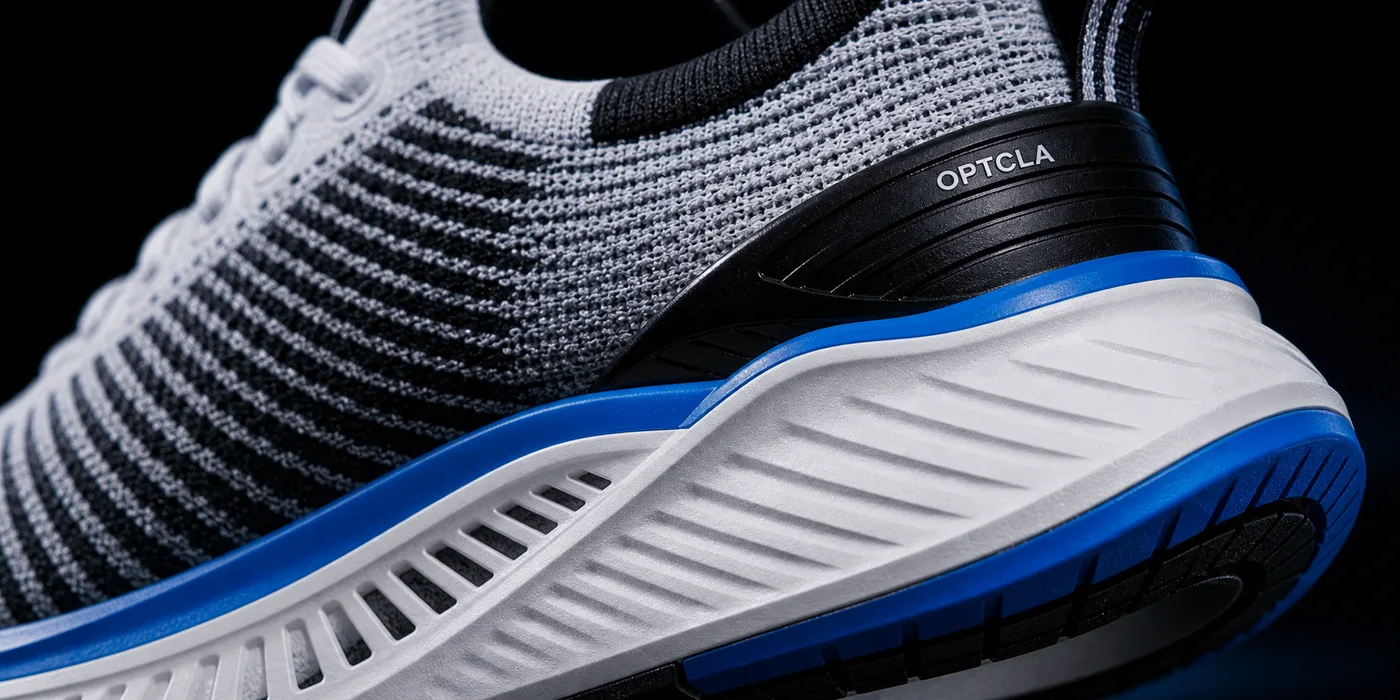
The OPTCLA AeroMax Runner is built around the combination many daily runners ask for: cushioned landings, breathable comfort, stable heel support, and enough front-foot room for natural movement. The responsive foam platform is designed to help soften repetitive pavement impact, while the engineered mesh upper helps heat escape during longer wear.
It is not a medical product and does not claim to treat knee pain. Its role is simpler: make road runs, walks, and daily active use feel smoother and more comfortable. If that is what you are looking for, you can choose your size and color or review the size guide before ordering.
Quick checklist before you buy running shoes for knee comfort
- Choose cushioning that softens impact without feeling unstable.
- Look for a secure heel and predictable platform.
- Make sure the forefoot allows natural toe movement.
- Prefer breathable mesh if you run or walk in warm conditions.
- Test shoes indoors first if the store offers returns.
- Do not ignore persistent pain; shoes are only one part of the solution.
Run softer on daily miles.
OPTCLA AeroMax Runner combines responsive cushioning, breathable mesh, and stable support for road running and active daily wear.
Shop OPTCLA AeroMax Runner View Size GuideFAQ
Can running shoes help with knee comfort?
They can influence comfort by changing how impact, stability, fit, and stride feel. They cannot diagnose or treat knee pain, and persistent pain should be reviewed by a qualified professional.
Is more cushioning always better?
No. Cushioning can soften landing feel, but a shoe that is too soft or unstable may feel less controlled. Many runners do best with a balance of cushioning and stable geometry.
What fit features matter most?
A secure heel, supported midfoot, and enough forefoot room help the foot feel stable without being squeezed during daily runs and walks.