
Comparison guide
Walking Shoes vs Running Shoes for Daily Wear
If you want one shoe for walking, standing, errands, travel, gym days, and easy runs, the label matters less than the construction. The right daily running shoe can often work well as a walking shoe when it balances cushioning, stability, airflow, and fit.
This guide is educational and focused on comfort and fit. Shoes can support a more comfortable daily routine, but they are not medical devices and do not treat injuries.
The main difference is movement demand
Walking shoes are usually built around repeated heel-to-toe movement at lower impact. Running shoes are built for higher repeated impact and faster transitions. For many daily users, those categories overlap. A stable daily trainer can be comfortable for walking because it already has cushioning, breathable materials, and support for repeated steps.
The wrong running shoe can still be a poor walking shoe. A narrow racing shoe, an unstable super-soft platform, or a minimal shoe may not feel practical for all-day wear. The goal is not simply to buy any running shoe. The goal is to choose a daily running shoe with walking-friendly comfort.
When running shoes work well for walking
Running shoes can work well for walking when the cushioning feels balanced, the heel stays secure, the upper breathes, and the toe box does not squeeze. These features matter for daily errands, long sidewalks, standing at work, travel days, and easy training.
If you want one pair for both walking and light running, avoid shoes that feel unstable when turning or overly tight across the front of the foot. The shoe should feel controlled at walking pace before it feels good at running pace.
Where walking shoes can fall short for runners
Some walking shoes are comfortable at low speed but may feel too firm, heavy, or inflexible for running. They may not provide the same impact-softening feel on pavement, especially if you run several times per week.
If your routine includes easy running, choose a shoe that can handle repeated landings. That does not mean the shoe has to feel aggressive. A daily trainer with responsive cushioning can cover both use cases more naturally.
Daily wear comparison checklist
| Need | Walking shoe focus | Daily running shoe focus |
|---|---|---|
| Cushioning | Comfort for lower-impact steps | Softens repeated pavement landings and walking pressure |
| Stability | Steady heel-to-toe walking | Stable heel and smoother transitions at different speeds |
| Breathability | Useful for long wear | Useful for walking, running, travel, and warmer conditions |
| Forefoot room | Helps all-day comfort | Helps walking comfort and toe movement during longer runs |
| Versatility | Best for walking-first routines | Best when walking, errands, standing, and easy runs overlap |
How OPTCLA AeroMax Runner fits the overlap
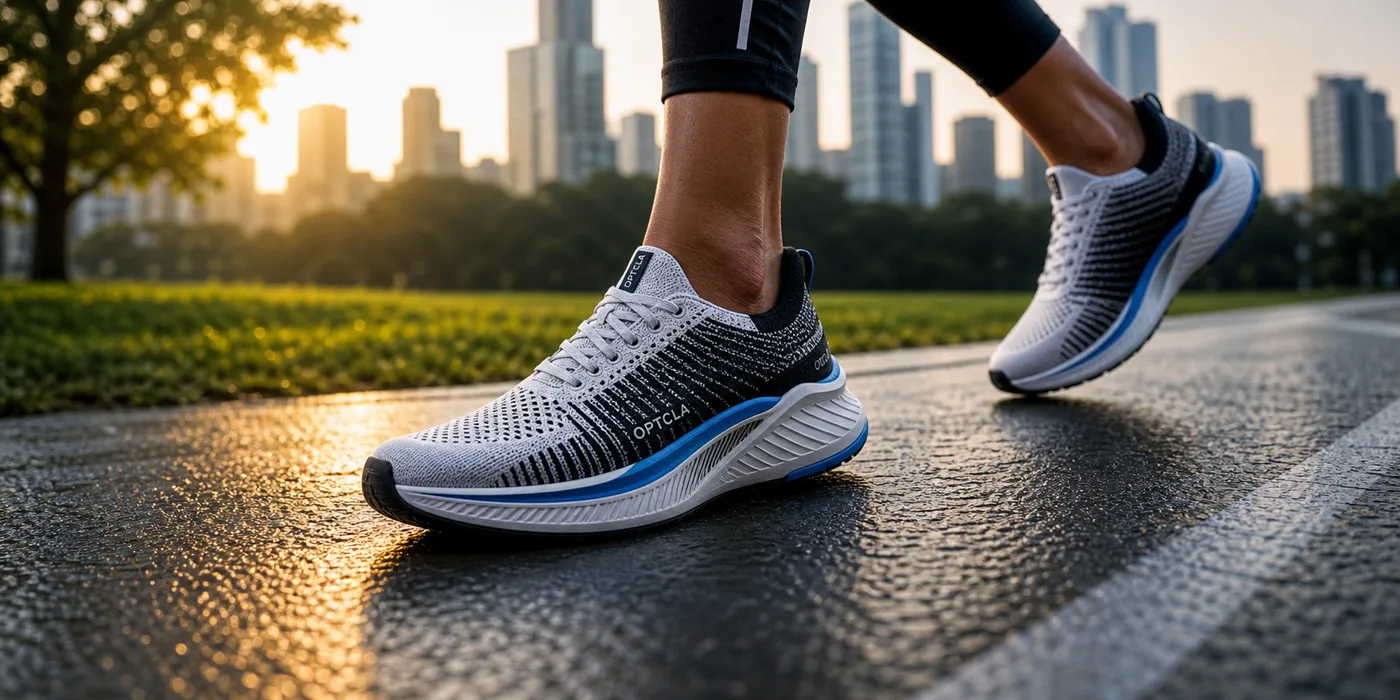
OPTCLA AeroMax Runner is a daily road-running shoe, but its comfort features also apply to walking and long wear: responsive foam cushioning, breathable mesh, stable heel support, and a roomier front fit. That makes it relevant for people who want one shoe for errands, travel, walking, standing, and easy road miles.
For more detail on long wear, read the guide to comfortable shoes for standing and walking all day. If your main concern is heat, see breathable walking and running shoes. If your main concern is choosing the right fit, use the OPTCLA size guide.
When to choose OPTCLA
- You want one shoe for walking, easy running, errands, and active days.
- You prefer cushioning that feels protective without feeling unstable.
- You want a breathable upper for long wear.
- You need secure heel support with more natural forefoot room.
- You want Stripe or PayPal checkout and a clear return policy before ordering.
Choose one shoe for daily movement.
OPTCLA AeroMax Runner combines road-running cushioning, walking-friendly comfort, breathable mesh, stable support, roomy forefoot fit, secure Stripe and PayPal checkout, and a 30-day return and exchange window.
Choose Size and Color View Size GuideFAQ
Can running shoes be used as walking shoes?
Yes. Running shoes can work well for walking when they are stable, cushioned, breathable, and comfortable through the heel, midfoot, and forefoot.
Are walking shoes or running shoes better for daily wear?
It depends on the shoe and the routine. Many daily running shoes work well for walking, errands, and light activity because they combine cushioning, support, and breathable materials.
What should I look for in one shoe for walking and running?
Look for balanced cushioning, stable heel support, breathable upper materials, enough forefoot room, and a fit that feels secure without squeezing.