
Walking comfort guide
Comfortable Shoes for Standing and Walking All Day
A shoe that works for a short run is not always comfortable for a long day. If your routine includes standing, walking, errands, commuting, travel, or easy miles, the right shoe needs cushioning, airflow, stable support, and enough front-foot room.
This guide is educational and focused on comfort and fit. Shoes can support a more comfortable daily routine, but they are not medical devices and do not treat injuries.
All-day comfort is different from first-step softness
Many shoes feel soft when you first put them on. The harder question is how they feel after several hours on sidewalks, concrete floors, airport terminals, parking lots, or daily errands. A shoe that is too soft can feel unstable. A shoe that is too firm can feel harsh. A shoe that is too narrow can feel worse as the day goes on.
For long standing and walking, comfort usually comes from balance: cushioning that softens repeated steps, structure that keeps the foot controlled, breathable materials that reduce heat buildup, and a fit that does not squeeze the front of the foot.
Look for cushioning with control
Cushioning matters because hard surfaces repeat the same pressure over and over. Responsive foam can help make each step feel less sharp. The platform should still feel steady under the heel and midfoot. If the shoe collapses inward or feels wobbly, the softness may become tiring.
A daily trainer often makes more sense than an aggressive race shoe. It is built for repeated use, slower paces, walking, light running, and mixed routines rather than only speed.
Breathability matters during long wear
Heat changes how a shoe feels. A shoe that feels fine indoors can become uncomfortable once your feet warm up. Breathable mesh helps air move through the upper so the shoe feels less trapped during long wear.
Breathability should not mean a loose upper. The best daily shoes use ventilation while still holding the heel and midfoot securely.
Forefoot room helps the shoe stay comfortable
Feet can feel slightly wider after hours of walking or standing. A tight front fit may create pressure around the toes and the widest part of the foot. A roomier toe box gives toes more natural movement without requiring the whole shoe to feel oversized.
If toe pressure is your main concern, read the OPTCLA guide to roomy toe box running shoes. If you are choosing between sizes, use the OPTCLA EU 44-52 size guide before checkout.
Daily walking shoe checklist
| Feature | Why it matters | What to avoid |
|---|---|---|
| Responsive cushioning | Helps soften repeated steps on hard surfaces | Foam that feels unstable or overly mushy |
| Stable heel | Helps reduce sliding during walking and turns | Heel lift or rubbing after a few steps |
| Breathable upper | Helps reduce hot, trapped-feeling wear | Heavy upper materials with little airflow |
| Roomy forefoot | Allows more natural toe movement through the day | Narrow pressure across the widest part of the foot |
Where OPTCLA AeroMax Runner fits
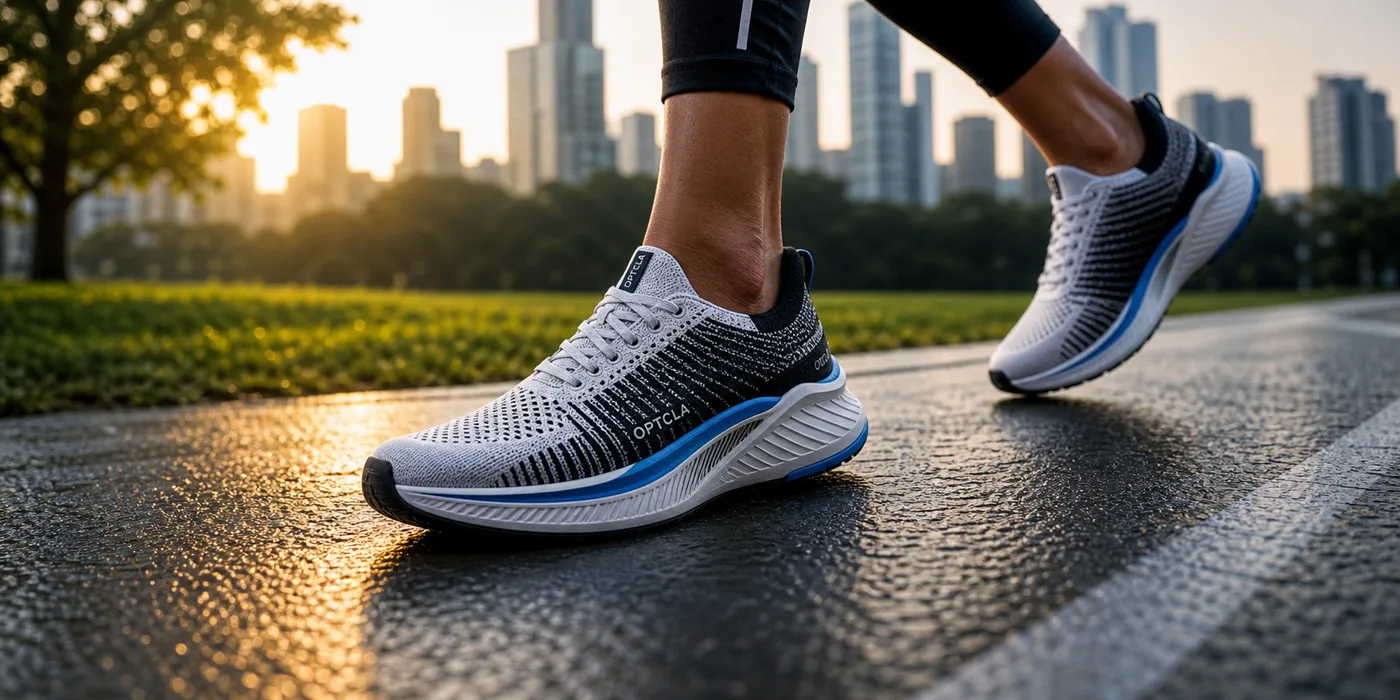
OPTCLA AeroMax Runner is built as a daily road-running shoe, but the same features matter for walking and long wear: responsive foam underfoot, breathable mesh through the upper, stable heel support, and a roomier front fit. That makes it relevant for customers who want one pair for easy runs, long walks, travel days, errands, and active routines.
If your main concern is repeated road impact, see our guide to reducing impact on pavement. For heat control and daily wear, see the breathable walking and running shoe guide.
Choose a cushioned daily shoe built for long wear.
OPTCLA AeroMax Runner combines responsive cushioning, breathable comfort, stable heel support, forefoot room, secure Stripe and PayPal checkout, and a 30-day return and exchange window.
Choose Size and Color View ReturnsFAQ
What makes a shoe comfortable for standing all day?
A comfortable shoe for long standing usually combines balanced cushioning, stable heel support, breathable materials, and enough forefoot room so the foot does not feel squeezed after hours of wear.
Can running shoes work for walking and standing?
They can work well when they are stable, cushioned, breathable, and not overly narrow. A daily trainer is often more practical than a racing shoe for all-day use.
Should shoes for standing all day be very soft?
Not necessarily. Very soft shoes can feel comfortable at first but unstable over time. Many people prefer cushioning that softens impact while keeping the foot controlled.