
Walking comfort guide
Can You Use Running Shoes for Walking Every Day?
Yes, running shoes can work well for everyday walking. The best choice is usually not a racing shoe or the softest shoe on the shelf, but a stable cushioned daily trainer that feels comfortable at walking pace and still supports easy runs.
This guide is educational and not medical advice. If walking or running causes persistent pain, consult a qualified professional.
Running shoes can be good walking shoes when the design is balanced
Walking and running are different movements, but they overlap more than many shoppers think. A daily running shoe already has features that can help during walking: cushioning underfoot, a breathable upper, heel support, and a shape built for repeated steps.
The key word is balanced. A shoe that feels soft for five seconds in a store may not feel stable after a long walk. A shoe that feels fast for running may be too narrow, too stiff, or too specialized for errands and travel. For daily walking, choose comfort you can repeat for hours.
What to check before using running shoes for walking
| Factor | Why it matters for walking | What to look for |
|---|---|---|
| Cushioning | Hard floors, sidewalks, and errands create repeated pressure. | Responsive foam that feels protective without feeling unstable. |
| Heel security | Heel slip can create friction and reduce confidence over long walks. | A padded collar and heel counter that hold the foot without squeezing. |
| Breathability | Walking often means long continuous wear, especially during travel or workdays. | Mesh or ventilated upper materials that help heat escape. |
| Forefoot room | Toes need space as feet warm up and swell slightly over the day. | A front shape that lets toes move naturally without sliding inside the shoe. |
| Durability expectations | Walking miles still count toward shoe wear. | Track total use across walking, errands, standing, and running. |
Does walking wear out running shoes?
Yes. Walking, standing, errands, travel, and running all add use to the foam and outsole. A shoe does not only age during workouts. If you wear the same pair for daily walking and running, the total mileage builds faster.
How long a shoe lasts depends on body weight, gait, surface, weather, total mileage, and how often the pair gets used. Concrete floors and sidewalks can be demanding, so pay attention to changes in cushioning feel, outsole wear, heel stability, and upper comfort.
When running shoes are not the right walking choice
Some running shoes are too specialized for daily walking. Carbon-plated race shoes, aggressive trail shoes, narrow speed shoes, and unstable max-cushion shoes may be useful in the right setting but awkward for errands, travel, and long casual wear.
If you want one pair for daily walking and easy running, a cushioned daily trainer is usually the safer category to evaluate. It is designed for repeated movement without being limited to race day or trail conditions.
How OPTCLA AeroMax Runner fits daily walking
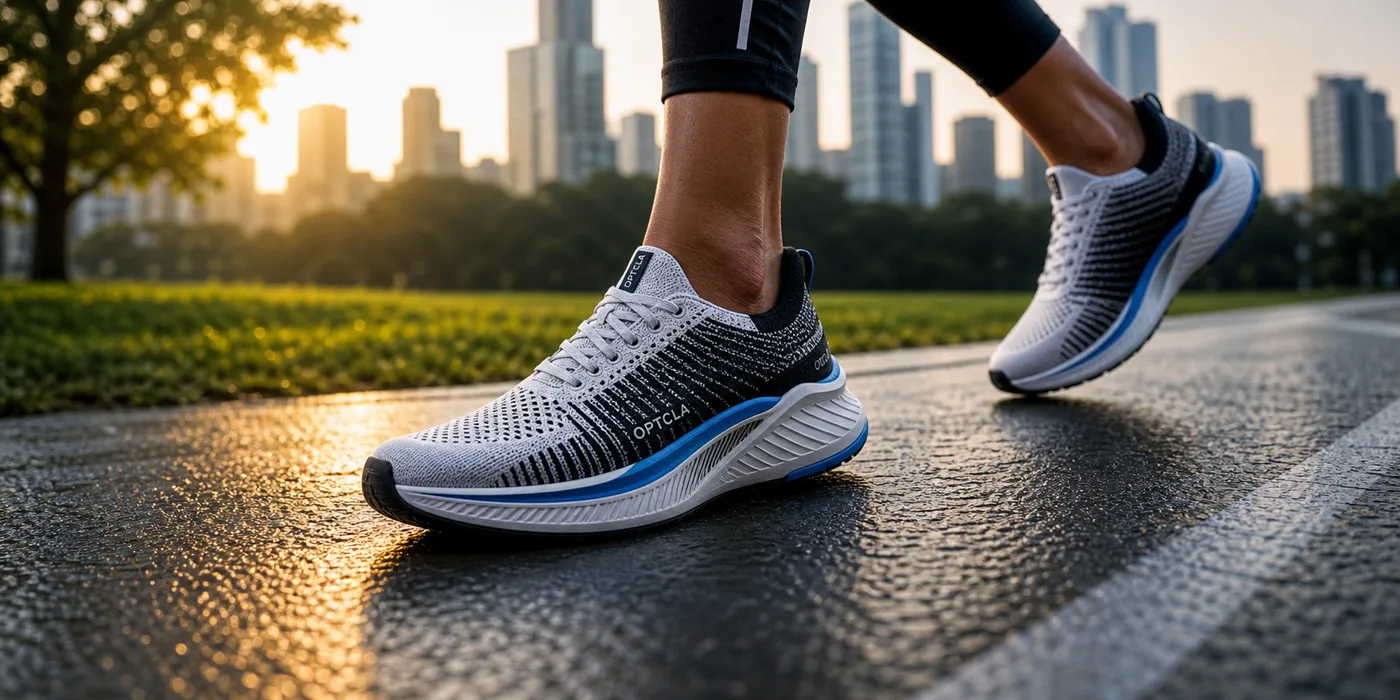
OPTCLA AeroMax Runner is built as a cushioned road-running shoe, but its structure also supports everyday walking. It uses responsive foam for hard-surface comfort, breathable mesh for longer wear, stable heel support, and a roomier forefoot fit for natural toe movement.
That makes it a practical option if your day includes sidewalks, errands, travel, standing, and easy miles. If your routine is mostly concrete floors, also read the concrete floors and sidewalks guide. If you are comparing categories, read Walking Shoes vs Running Shoes for Daily Wear.
How to buy one shoe for walking and easy running
- Choose size first, then color. Use the OPTCLA size guide before checkout.
- Prioritize stable cushioning over maximum softness.
- Check that the upper feels breathable enough for long wear.
- Leave enough forefoot room for toe movement during warm days or long walks.
- Review shipping, returns, and support options before ordering from any new brand.
One daily trainer for walks, errands, travel, and easy miles.
OPTCLA AeroMax Runner combines road-running cushioning, walking-friendly comfort, breathable mesh, stable heel support, roomier front fit, Stripe and PayPal checkout, and a 30-day return and exchange window for eligible orders.
Choose Size and Color Read Buying GuideFAQ
Can running shoes be used for walking every day?
Yes. Running shoes can work well for everyday walking when they are stable, cushioned, breathable, and comfortable through the heel, midfoot, and forefoot.
Does walking wear out running shoes?
Yes. Walking, standing, errands, and running all add mileage to the foam and outsole. Shoe life depends on total mileage, surface, body weight, gait, and how often the shoes are used.
What type of running shoe is best for walking too?
A stable cushioned daily trainer is usually more practical for walking than a racing shoe, trail shoe, or extremely soft high-stack shoe. Look for balanced cushioning, breathable materials, heel security, and forefoot room.