
Daily comfort guide
Breathable Walking and Running Shoes for Daily Comfort
Most people do not use running shoes only for running. They wear them for errands, long walking days, light workouts, travel, and easy road miles. That makes breathability, cushioning, and fit matter just as much as speed.
This guide is educational and focused on comfort and fit. Shoes can help daily movement feel better, but they are not medical devices and do not treat injuries.
Why breathability matters for daily shoes
A shoe can feel comfortable for the first ten minutes and still feel hot, tight, or heavy after a full day. Heat and moisture build up inside the upper. When that happens, the foot can feel more cramped, the sock can hold more moisture, and the shoe can feel less fresh during long wear.
Breathable walking and running shoes solve a practical problem: they help air move through the upper. That matters for warm weather, indoor-outdoor routines, city walking, travel days, gym-to-street use, and easy runs on pavement. A ventilated shoe does not need to feel thin or flimsy. The better version combines airflow with structure.
Walking comfort and running comfort overlap
Walking and running are different movements, but they share the same comfort basics. The shoe should land smoothly, hold the heel, support the midfoot, and leave enough room at the front. A shoe that feels unstable during a walk will not feel better during a run. A shoe that overheats during errands can feel worse once pace and body temperature increase.
For many buyers, the best daily shoe is not an aggressive racing shoe. It is a dependable trainer that works at multiple speeds. It should feel easy on sidewalks, steady during light runs, and comfortable enough for repeated use.
Look for airflow without sloppy fit
Some breathable shoes use very open mesh but lose structure. That can make the foot slide inside the shoe, especially around turns or downhill walking. A better daily upper uses mesh for airflow while still holding the foot in place.
Check three areas when judging fit: the heel should not lift, the midfoot should feel supported, and the forefoot should allow natural toe movement. If any of these feel wrong, breathability alone will not save the shoe.
Cushioning still matters for walking
People often talk about cushioning for running, but walking can also involve thousands of repeated steps on hard surfaces. Concrete floors, sidewalks, parking lots, airports, and city streets all add up. Responsive foam can help soften the feel underfoot while keeping the shoe useful for easy runs.
The goal is not a shoe that feels mushy. Daily comfort usually comes from a balanced platform: enough foam to reduce harshness, enough shape to stay stable, and enough flexibility to move naturally.
Breathable shoes are useful for travel and workdays
If one pair of shoes has to handle a full day, it needs to do more than look athletic. It has to stay comfortable through sitting, standing, walking, and light activity. Breathable mesh can help the shoe feel less stuffy. A stable heel can reduce rubbing. A roomy front fit can make longer wear easier.
This is where daily trainers often make sense. They are not limited to race day or gym time. They can be the practical shoe you reach for when the day includes movement but you do not want your feet to feel trapped.
How OPTCLA AeroMax Runner fits this use case
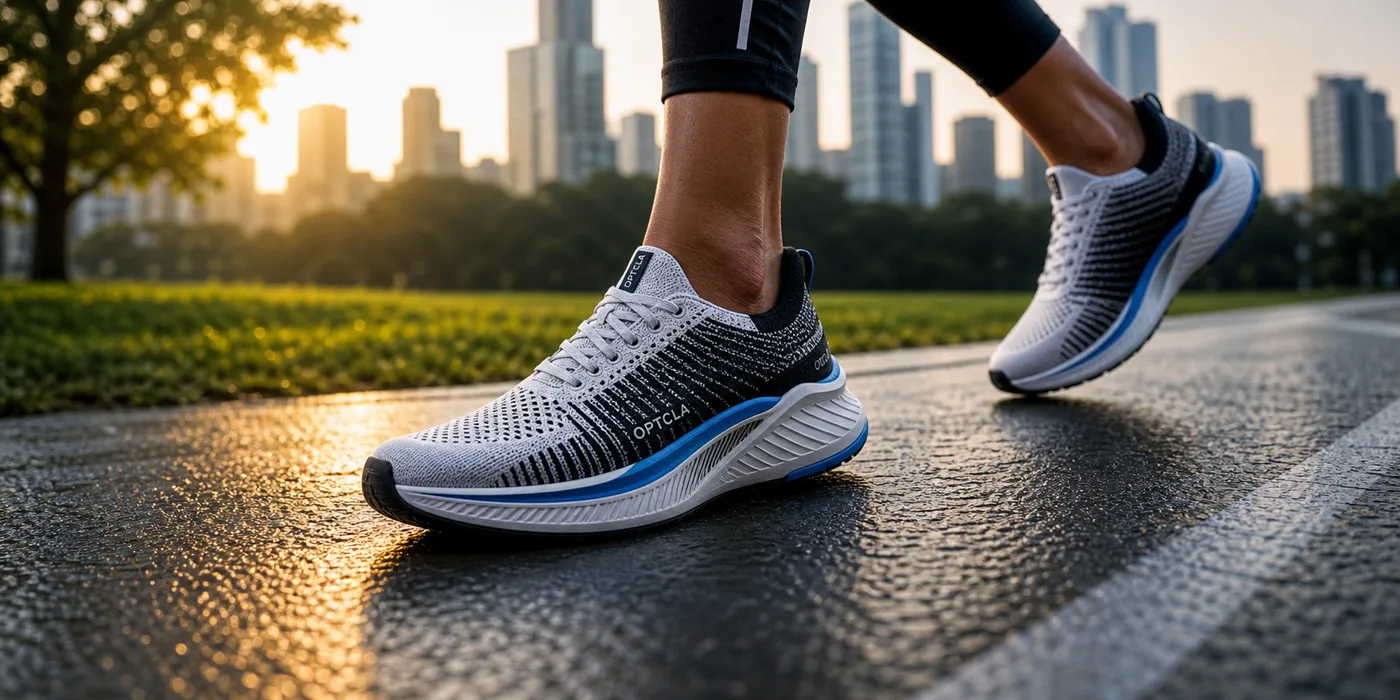
OPTCLA AeroMax Runner is built for softer landings, breathable comfort, and stable daily support. The engineered mesh upper helps airflow move through the shoe. The responsive foam platform is designed to make pavement feel less harsh. The heel structure helps the shoe feel secure, while the front-foot fit gives toes more natural room than a narrow, tight trainer.
That combination makes it a practical option for people who want one shoe for road runs, walking, travel, and active daily routines. If your main concerns are pavement impact and knee comfort, you can also read our guides on reducing impact on pavement and running shoes for knee comfort.
Quick checklist before buying breathable daily shoes
- Choose a breathable upper that still holds the foot securely.
- Look for cushioning that feels protective without wobbling.
- Make sure the heel does not lift during walking.
- Leave enough front-foot room for toe movement.
- Use the size guide if you are between EU and US sizing.
- Check payment, shipping, and return policies before ordering.
Built for the miles between workouts.
OPTCLA AeroMax Runner combines ventilated comfort, responsive cushioning, stable support, secure Stripe and PayPal checkout, and a 30-day return and exchange window.
Choose Size and Color View Size GuideFAQ
Are breathable running shoes good for walking?
They can be, as long as they also provide stable support, cushioning, and a secure fit. Breathability helps the shoe feel cooler during long wear.
What makes a shoe comfortable for both walking and running?
A good daily shoe balances cushioning, heel security, forefoot room, breathable materials, and smooth transitions. It should feel stable at walking pace and protective during light road runs.
Should daily walking and running shoes feel roomy?
They should feel secure through the heel and midfoot while leaving enough room at the front. Too much looseness can cause sliding, while too little room can create pressure.