
Road-running comfort guide
Best Running Shoes for Reducing Impact on Pavement
Pavement is predictable, but it is not forgiving. The best daily running shoes for hard roads combine cushioning, stable geometry, breathable materials, and a fit that lets your stride stay relaxed over repeated miles.
This guide is educational and not medical advice. Shoes can change comfort and impact feel, but persistent pain or injury symptoms should be reviewed by a qualified professional.
Why pavement impact feels different
Concrete and asphalt do not absorb much energy. During a road run, your body handles thousands of similar landings, often with little surface variation. That repetition is why runners often look for shoes that make hard surfaces feel smoother without making the ride unstable.
Impact is not only about softness. A shoe that feels plush while standing may feel awkward while running if the platform is narrow, unstable, or too disconnected from the ground. The best pavement shoe should reduce harshness while still helping the foot move cleanly from landing to toe-off.
1. Choose responsive cushioning, not just more foam
Cushioning helps soften the feel of road impact. But more foam is not automatically better. Some runners enjoy tall max-cushion shoes, while others feel safer in a moderately cushioned daily trainer with a more stable base. The goal is a midsole that absorbs impact, rebounds smoothly, and does not make the foot work too hard to stay centered.
For daily miles, look for language like responsive foam, cushioned landings, stable platform, and smooth transitions. These features matter more than a single stack-height number. A good road shoe should feel protective after 30 minutes, not just soft in the first 30 seconds.
2. Stability keeps cushioning useful
Soft cushioning only helps if the shoe remains controlled. A stable heel and predictable midsole geometry can make each landing feel more repeatable. That matters on pavement because small instability repeated over many strides can feel tiring.
You do not necessarily need a traditional stability shoe. Many runners simply need a neutral shoe with enough platform width, heel structure, and midfoot security. If the shoe feels like it is rolling inward, twisting easily, or letting the heel slide, it may not be the best choice for long-term daily comfort.
3. Fit and toe room affect impact comfort
Impact comfort is not only underfoot. If your toes are squeezed, your heel slips, or your laces have to be overtightened to keep the shoe secure, the whole stride can feel less natural. For pavement running, where every step repeats the same motion, fit problems can become noticeable quickly.
A good daily road shoe should hold the heel, support the midfoot, and leave enough room at the front for natural toe movement. If you are choosing an OPTCLA size online, use the EU to US men's size guide before checkout.
4. Breathable uppers help long road runs feel easier
Pavement running often happens in neighborhoods, sidewalks, warm weather, gyms, and everyday training routes. Heat buildup can make a shoe feel tighter and heavier. A breathable mesh upper helps air move through the shoe, which can make longer wear more comfortable.
For North American customers who want one shoe for running, walking, and daily active use, breathability matters. It supports the kind of repeated use that a daily trainer should handle without feeling overbuilt.
5. Do not ignore training load
Even the best shoe cannot compensate for doing too much too quickly. If pavement running feels harsh, consider the full system: weekly mileage, pace, strength work, recovery, route surface, and shoe age. A cushioned shoe can improve comfort, but gradual training is what makes comfort sustainable.
If you are returning to running, begin with easy mileage and short run-walk sessions. Pay attention to how your body feels the next day. A shoe that supports daily comfort should help you build consistency, not push you into harder runs before you are ready.
How OPTCLA AeroMax Runner fits this use case
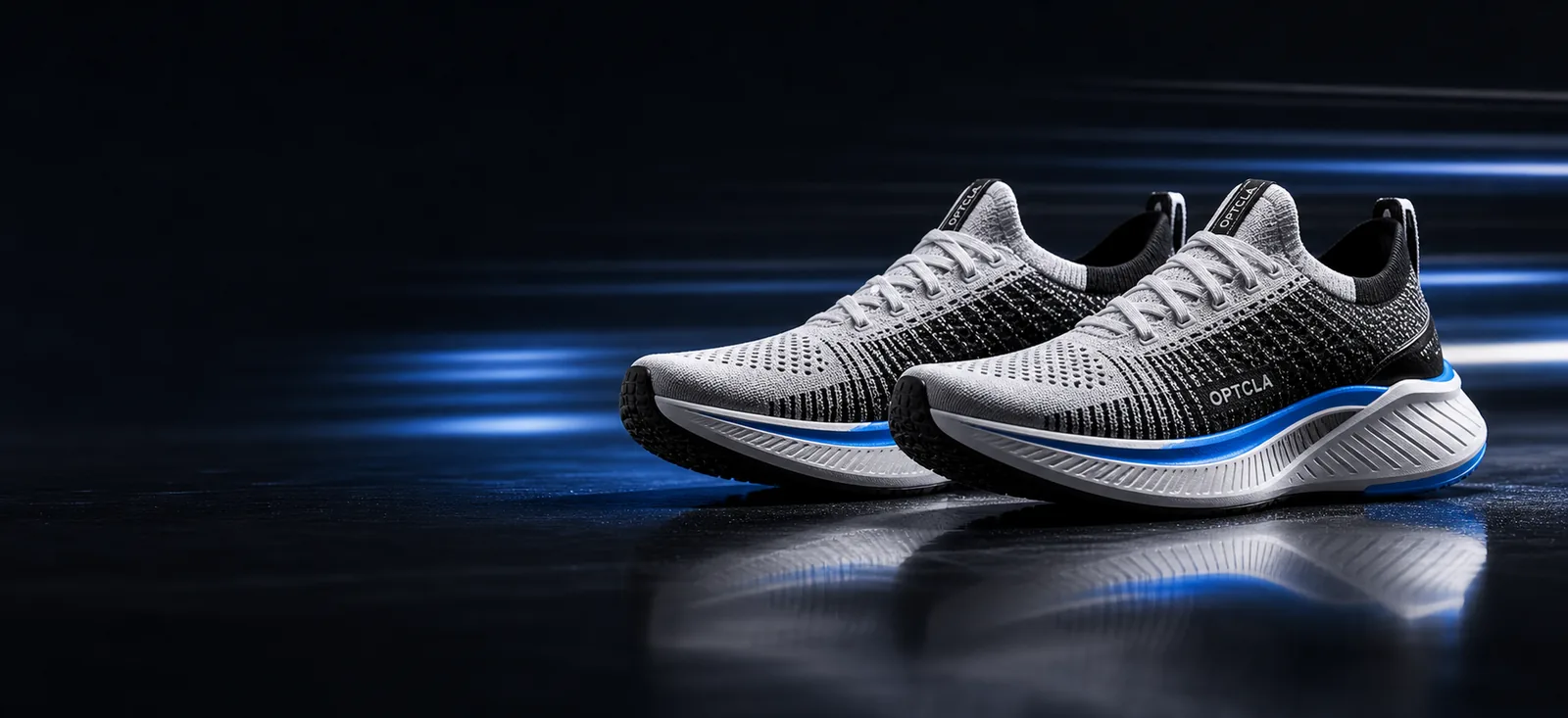
The OPTCLA AeroMax Runner is designed for softer landings, breathable comfort, and stable daily support. Its responsive foam platform helps take the edge off repetitive pavement impact, while the heel structure and engineered mesh upper keep the ride controlled and wearable beyond the run.
If your goal is a cleaner daily running shoe for road miles, walking, and active routines, OPTCLA is built around that balance. You can choose your size and color, compare sizing in the size guide, or read our related guide on running shoes for knee comfort.
Quick buying checklist
- Look for responsive cushioning that does not feel unstable.
- Prioritize a stable heel and predictable midsole shape.
- Choose enough toe room for daily mileage.
- Use breathable mesh for warm-weather or all-day wear.
- Review the return policy before testing a new shoe indoors.
- Pair shoe comfort with gradual training and recovery.
Built for softer pavement miles.
OPTCLA AeroMax Runner combines responsive cushioning, breathable mesh, and stable support for road running and daily active wear.
Shop OPTCLA AeroMax Runner Read Knee Comfort GuideFAQ
What shoe features help reduce pavement impact?
Look for responsive cushioning, stable midsole geometry, a secure heel, enough forefoot room, and a smooth transition from landing to toe-off.
Are max-cushion shoes always best for pavement?
No. Max-cushion shoes can feel protective, but some runners prefer a stable daily trainer that balances cushioning, control, and breathable comfort.
Can running shoes prevent injuries on pavement?
No shoe can guarantee injury prevention. Shoes can improve comfort and impact feel, but training load, strength, recovery, and running mechanics also matter.